Children and Youth Behavioral Health Initiative: Mental Health Reimbursement
KIPP Northern California is now part of a program that ensures our schools can provide sustainable resources and care to students who need mental health support.

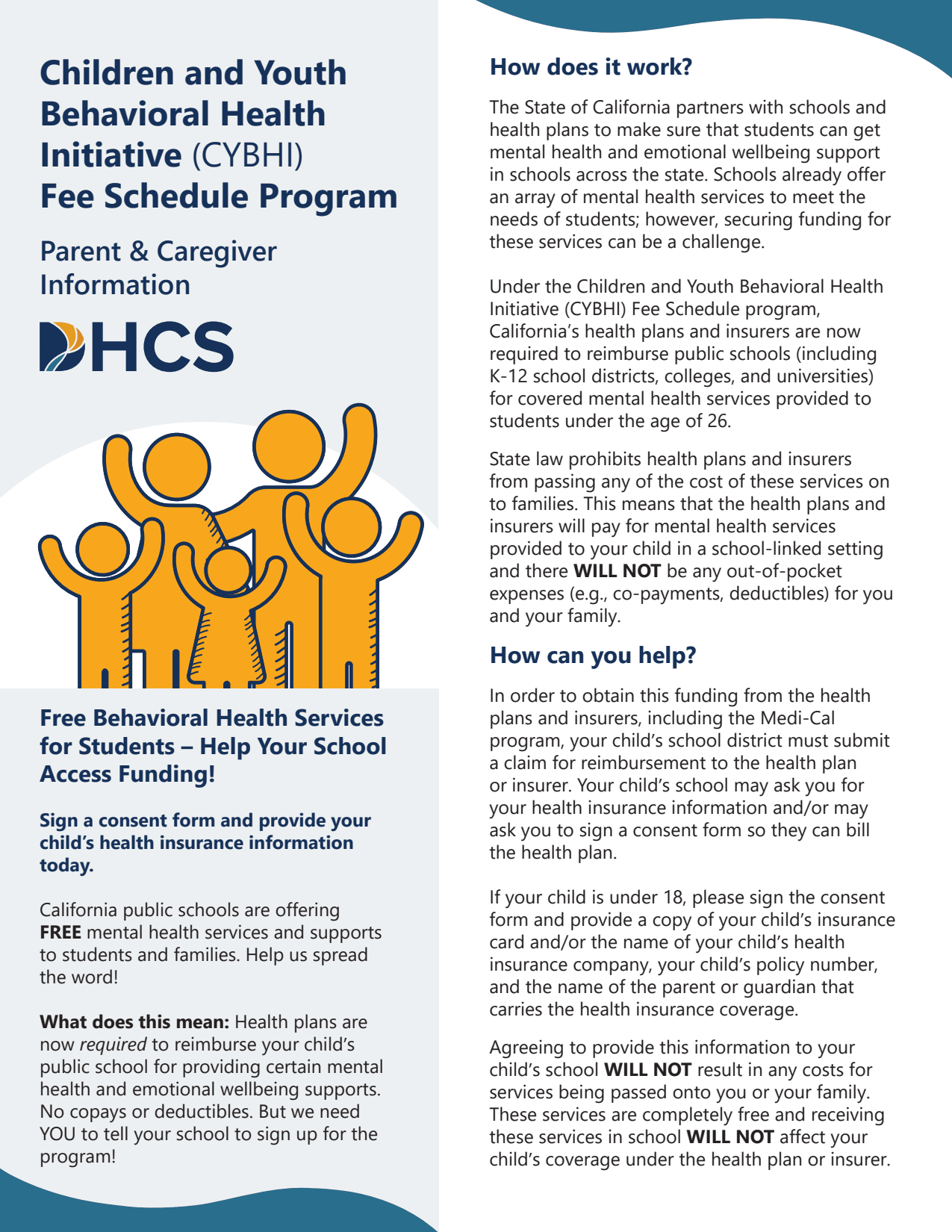
This statewide initiative ensures schools can better provide resources and care to your child should they need support.
Called the “California Child and Youth Behavioral Initiative,” the program allows schools to be reimbursed for socio-emotional mental health services they provide to students. The reimbursements come from families’ health insurance providers, including Medi-Cal and private insurance to support ongoing socio-emotional and mental health services for students on campus.
We will be asking parents to provide their health insurance or Medi-Cal on an annual basis. Starting this school year (2025-26), the request will be part of the annual Essential Student Data collection process.
Contact Information
Email: studenthealth@kippnorcal.org

Starting in 2021, the CYBHI program helps schools provide mental health support to students under 26 at no cost to families. Your health insurance company pays the school directly for these services.
Services Available
Your child can receive support through social-emotional learning in their classes and through mental health check-ins. Schools also offer counseling for challenges like managing anxiety, building friendships, staying organized, coping with grief, and substance use concerns.
How This Helps Your Family
There is no cost to your family – your insurance pays the school directly with no co-pays, deductibles, or premium increases. Getting help at school won’t change your insurance benefits or limit your ability to see mental health providers outside of school.
This first-of-its-kind program makes it easier for students to get mental health care when and where they need it, while ensuring schools have funding to continue these important services.
The new program will enable us to continue providing mental and emotional health services to your children. Here’s how it works:
- Step 1: We collect your insurance information. KIPP Northern California will ask for your student’s health insurance information so we can submit reimbursement requests for services we provide. We keep this information secure and confidential, as required by state and federal laws.
- Step 2: Annual data collection. We request this information once a year as part of our essential student data collection process that each KIPP school conducts.
- Step 3: We provide services and request reimbursement. After providing mental or emotional services or support to your child, we submit a reimbursement request to your insurance company.
- Step 4: Insurance pays directly. Medi-Cal or your insurance company reimburses us directly at no cost to you. State law prohibits passing any of these costs on to families.
KIPP Northern California Notices and Communications
Frequently Asked Questions about the CYBHI Program
No, this program won’t change the type of mental health services your child receives at school. What changes is how we pay for these services – instead of using only school funding, we can now get reimbursed by insurance companies. Your child can receive behavioral health check-ins, assessments, and ongoing mental health support through insurance reimbursement, and they can still get other types of services even if insurance doesn’t cover them.
If your child receives special education services, they will continue to receive all services specified in their IEP exactly as before. The program only affects how we fund mental health and social-emotional services – it doesn’t change any educational services or supports your child already receives.
We’re required to collect health insurance information from all families, even if your child isn’t currently receiving individual mental health services. This is because all students participate in mental health-related activities as part of their school experience – from social-emotional learning lessons in class to peer conflict resolution and general behavioral health screenings. The CYBHI program requires districts to have insurance information on file so we can request reimbursement for any eligible mental health services we provide, whether they’re planned individual counseling or everyday supports that happen naturally in school. Having this information ready means we can focus on providing timely support to students without delays.
The CYBHI Program will not affect your health insurance. California Welfare & Institutions Code section 5961.4 and California Health & Safety Code Section 1374.722 (b)(6) prohibit insurance companies from requiring co-payments for CYBHI services or changing a family’s insurance based on its use of them.
Yes, your child can receive mental health services at our sites even if your family
does not have health insurance.During Data Confirmation in the fall, please indicate that you don’t have health insurance on the CYBHI form. (There is an option for that.) That will help us keep track of our billing.
Some services like social-emotional education happen during regular class time and don’t require parent permission – these are educational lessons that all students participate in. However, we will ask for your consent before providing individual or group counseling services to your child. Keep in mind that under state law, students aged 12 and above can consent to certain mental health services without their parents’ permission, though we encourage family communication whenever possible.
Some services like social-emotional education happen during regular class time and don’t require parent permission. However, individual and group counseling do require your consent, and we will contact you before providing these services to your child. Please note that minors aged 12 and above are able to consent to certain services without their parents’ permission under state law.
State law requires families to provide their Medi-Cal or insurance information. However, not all students need mental health services or support, and the school will ask for your consent before providing individual or group counseling to your child.